SCIENTIFIC COALITION FOR UAP STUDIES
2023-2024
CONCEPT
CONTENT
COPYWRITING
PRODUCTION
STRATEGY
A Scientific Approach to a Stigmatized Domain
The Scientific Coalition for UAP Studies (SCU) is a nonprofit research organization composed of scientists, engineers, and academics dedicated to the evidence-based study of Unidentified Anomalous Phenomena (UAP).
Its membership includes senior researchers, aerospace engineers, and subject-matter experts with backgrounds spanning major U.S. research universities, defense and intelligence institutions, and federally affiliated scientific organizations.
SCU operates with an emphasis on methodological rigor, peer engagement, and responsible public communication, occupying a rare space at the intersection of aerospace science, sensor data analysis, and public accountability.
motivation
I was drawn to SCU not because of the subject’s speculative appeal, but because of the opposite: the absence of clear, credible public-facing communication around a topic already being studied by serious scientists.
Stigma has a chilling effect on research. When legitimate inquiry is framed poorly, it discourages qualified researchers, institutions, and funders from engaging at all. Helping SCU strengthen its public communication — without compromising rigor — was a way to lower that barrier and support a healthier research environment.
The goal was not persuasion, but clarity: to help one of the few organizations approaching UAP through disciplined scientific methods present itself in a way that matched the seriousness of its work.
scope of contribution
My role at SCU extended beyond visual refresh or brand alignment into the ongoing operational challenge of translating complex, often highly technical research into public-facing communication that preserved rigor while remaining accessible.
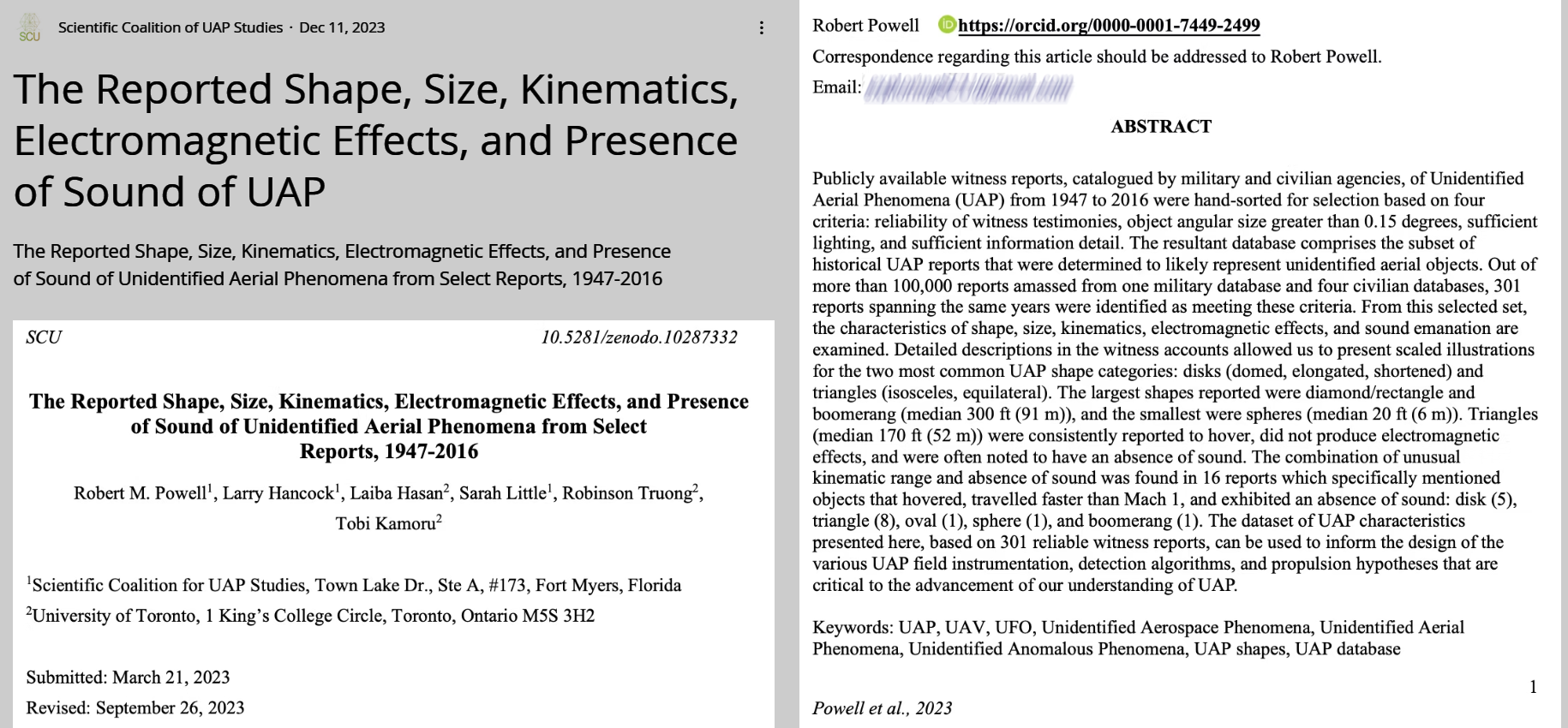
This work included distilling dense whitepapers, sensor analyses, and investigative findings into clear, platform-appropriate narratives for social and editorial channels—ensuring accuracy without oversimplification, and visibility without sensationalism.
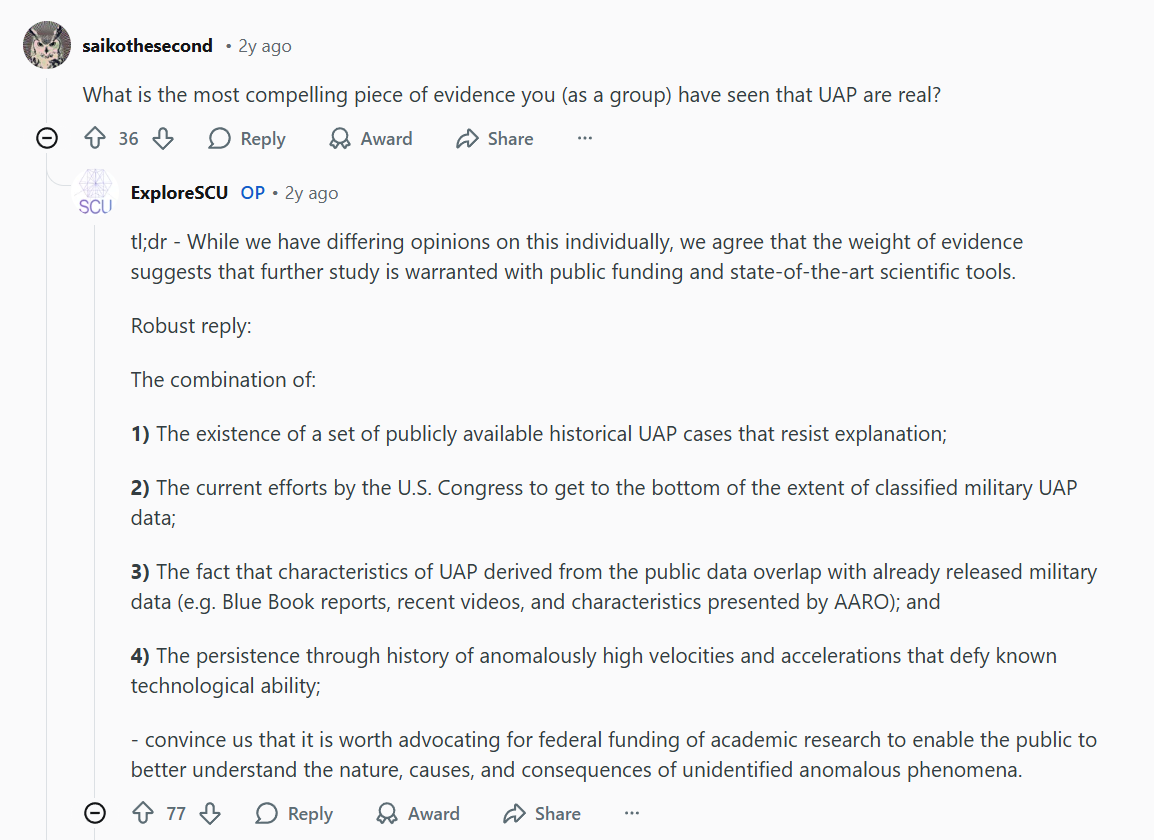
In parallel, I helped establish moderation frameworks and engagement standards designed to support constructive discourse in a domain prone to speculation and bad-faith noise. This allowed SCU’s researchers and leadership to engage publicly without compromising credibility or mission focus.
I also worked closely with SCU’s communications leadership to align messaging across press releases, social platforms, and external collaborations—helping the organization operate more fluidly within academic, aerospace, and policy-adjacent ecosystems.
The goal throughout was not persuasion, but translation: enabling legitimate research to be seen, understood, and taken seriously by journalists, academics, and institutions who might otherwise avoid the topic entirely.
institutional context and collaboration
SCU’s work exists within a broader ecosystem of scientific, aerospace, and policy-adjacent institutions, each with distinct standards around evidence, communication, and public accountability.
My role required operating within these constraints – ensuring that public-facing communication remained compatible with the expectations of academic researchers, aerospace professionals, and institutional stakeholders.
select collaborating institutions
Engagement within this ecosystem depends on trust — not visibility for its own sake. Public communication needed to signal seriousness to researchers, journalists, and institutional stakeholders who are often cautious about associating with the topic at all.
My role was to help SCU maintain that trust by ensuring its outward-facing communication reflected the discipline, tone, and evidentiary standards expected within these adjacent scientific and aerospace communities.